When you sell a home in a Temecula HOA, the "transfer fee" on your escrow statement is usually several charges bundled under one label: the association's cost to prepare the legally required resale documents, a charge to update its ownership records, and sometimes a separate capital contribution. California law caps the first two at the association's actual costs, and the seller pays for the required disclosure documents.
Because so much of Temecula real estate sits inside master-planned communities, nearly every seller and buyer we work with runs into these fees. Here is what each line actually pays for, who is responsible for it, and what to check before you open escrow.
Why does a California HOA charge anything at closing?
California's Davis-Stirling Common Interest Development Act requires a seller in an HOA to give the buyer a specific packet of association documents before the sale closes (Civil Code §4525). Most owners don't have all of those documents on hand, so they request them from the association or its management company, which charges to produce them (Civil Code §4530).
Separately, the association has to change its records to show the new owner — who gets billed, who gets the gate code, who can vote. That administrative work is the narrow thing the law allows a "transfer fee" to cover.
What is in the HOA resale document packet?
The §4525 packet is the bulk of what sellers pay for. It typically includes:
- The governing documents: CC&Rs, bylaws, articles of incorporation, and operating rules
- The current budget and reserve study summary from the association's annual disclosure
- A written statement of current regular and special assessments, plus any unpaid amounts tied to the home
- Notice of any unresolved violations the association has cited against the property
- Information on pending litigation, construction-defect claims, or approved special assessments
- Recent board meeting minutes, if the buyer requests them
The association must bill these on a standardized form titled "Charges for Documents Provided as Required by Section 4525" (Civil Code §4528), with each document's fee itemized. It cannot charge extra for electronic delivery instead of paper copies, and it cannot bundle the required documents with unrelated items to inflate the price.
What is the actual "transfer fee" limited to?
Under Civil Code §4575, an association generally may not impose any assessment, penalty, or fee in connection with a transfer of title, with two exceptions: an amount not exceeding the association's actual cost to change its records, and the document charges authorized under §4530. In other words, the transfer fee itself is meant to be an administrative cost recovery, not a profit center for the association.
One nuance worth knowing: California case law has held that the cost limits apply to the association, not necessarily to an outside management company acting as its agent. That is one reason document and transfer charges vary noticeably from one community to the next, even within the same ZIP code.
What other HOA charges show up in escrow?
Depending on the community, you may also see:
- Capital contribution or working capital fee — a one-time payment, usually set out in the CC&Rs, that goes into the association's reserves or operating fund. It is typically assessed at purchase.
- Rush or expedite fees — charged by some management companies when documents are needed faster than their standard turnaround.
- Demand or payoff statements — confirming the seller's account is current through closing.
- Prorated dues — the seller's share of the current period's regular assessment, credited or debited at close.
- Move-in/move-out or inspection fees — less common in single-family neighborhoods, more common in condo communities.
The §4528 form itself notes that it may not include every fee imposed before close of escrow, and that unrelated fees must be charged separately. Read the escrow statement line by line rather than assuming one total.
Why do some Temecula homes have two sets of HOA fees?
Many of the larger master-planned communities in the Temecula Valley are structured with a master association that runs community-wide amenities, plus a sub-association for a specific tract or gated village. When that's the case, each association can produce its own document packet and its own transfer charge, so the seller may see two sets of fees on the statement.
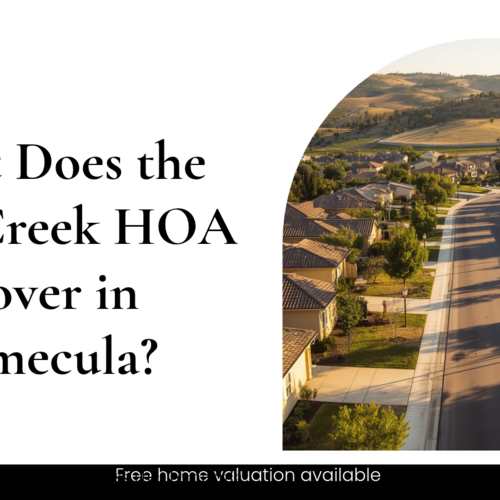
If you are comparing neighborhoods with this in mind, our Temecula neighborhood guides are a good starting point, and our breakdown of what the Wolf Creek HOA covers shows what ongoing dues pay for in one community. Always confirm the current association structure with the management company before you list or write an offer.
Who pays HOA transfer fees, the buyer or the seller?
The seller pays for the documents required under §4525 — that has been the rule since California amended the statute in 2012. Everything else is negotiable and is allocated in the purchase agreement. In practice, the California Association of REALTORS® Residential Purchase Agreement includes a section where the parties check boxes assigning HOA transfer fees, document preparation fees, and other association charges to the buyer, the seller, or split between them.
Local custom affects what a "normal" offer looks like, but nothing in the law fixes who pays a capital contribution or a management company's transfer charge. That makes it a legitimate negotiating point, especially in a market where buyers are asking for credits. For the full picture of seller-side costs, see our post on what a seller pays at closing in Riverside County.
What should sellers do before listing?
- Order the resale packet early. Associations must respond to a written request within a set statutory period, but requesting at listing avoids delays once you're in escrow.
- Ask for the fee estimate in writing. Under §4530, the association must provide a written or electronic estimate of document fees on request, before it processes the order.
- Clear any open violations. Unresolved violations appear in the packet and can become a buyer's negotiating lever.
- Check for both associations. If your home is in a master-planned community with a sub-association, request documents from each.
- Decide fee allocation before you counter. Know which charges you're willing to absorb so the conversation in negotiation is quick.
What should buyers check?
Buyers should read the resale packet within the contingency period, not just skim the dues figure. Look at the reserve study summary, any approved special assessments, pending litigation, and the capital contribution amount, since that one-time charge often lands on the buyer. If you are relocating to Temecula from out of state, these documents are also the fastest way to understand what a community's rules allow — rentals, RVs, solar, exterior changes, and more.
Next step
If you're planning to sell in an HOA community, we can pull the association's fee structure and resale requirements before you list, so there are no surprises on your closing statement. Buyers can request the same review for any home they're considering.
- Phone: (951) 501-3700
- Office: 30070 Temecula Parkway, Suite 201, Temecula, CA 92592
- Request a free home valuation or schedule a buyer consultation
This article is for informational purposes only and is not financial, tax, or legal advice. Statutes, association fees, and market conditions change; verify current requirements with your association, escrow officer, and a qualified California attorney before relying on this information.
Check out this article next